Casa / Notizia / Notizie del settore / How to Use Men's Compression Socks for Swollen Ankles: Fit, Timing, and Everyday Wear
How to Use Men's Compression Socks for Swollen Ankles: Fit, Timing, and Everyday Wear
A sock line that is still pressed into your ankle at six in the evening is not a laundry problem. It usually means fluid has pooled in your lower leg during the day, and the fix is not a looser sock. It is a sock that puts the right amount of pressure in the right place at the right time.
Here is the short answer for men dealing with swollen ankles. Choose a measured calf-length or knee-high compression sock in the 15 to 20 mmHg range for everyday puffiness, put it on before you stand up in the morning, and wear it for 8 to 12 hours. Low-cut ankle socks and tight everyday socks rarely solve the problem, because graduated pressure has to be spread along the leg rather than squeezed into a single band above the ankle bone.
Why Compression Helps a Swollen Ankle
Compression socks work on a principle called graduated pressure. The strongest pressure sits at the ankle and gets weaker as the fabric climbs toward the knee. That gradient supports the veins and the calf muscle pump, the natural mechanism that pushes fluid back toward the heart. Without that support, fluid collects around the ankle bone through the day, and the swelling is usually at its worst in the late afternoon.
Length matters for the same reason. A low-cut sock creates one narrow zone of pressure, while a calf-length sock spreads the gradient across the ankle and the lower leg. For a man whose swelling reaches above the ankle bone, calf length is the practical minimum, and knee-high is often the better choice on days with long sitting, long standing, or air travel.
This is also why an ordinary dress sock feels wrong even when it fits. Everyday socks are knitted to stay up, not to create a pressure gradient, so they squeeze hardest at the top band. That is the opposite of what a swollen ankle needs.
Match the Compression Class to Your Swelling
Compression is sold in classes defined by the pressure measured at the ankle in millimetres of mercury. Buying the strongest class on the shelf is a common mistake. More pressure is not the same as more relief, and a class that is too high can leave your toes cold, numb, or tingling by lunchtime.
Compression classes are set by the pressure measured at the ankle in millimetres of mercury, and the pressure is designed to fall as the sock rises up the leg.
Class
Pressure at the ankle
Typical use
Fitting note
Mild support
8 to 15 mmHg
Tired, mildly puffy ankles after long standing or a flight
The easiest class to put on, often sold as a travel sock
Moderate support
15 to 20 mmHg
Everyday ankle swelling, long shifts, post-flight puffiness, mild injury recovery
The usual starting point for men, and it needs a measured calf
Firm support
20 to 30 mmHg
Noticeable swelling and clinician-directed treatment
Needs an accurate measurement and a fit check, not guesswork
Extra firm support
30 to 40 mmHg
Significant swelling and lymphedema, prescribed rather than self-selected
Fitted and supervised by a clinician
For mild to moderate swelling caused by standing, sitting, or travel, the 15 to 20 mmHg class is the usual starting point. If a clinician has already told you to manage more significant swelling, or you are recovering from an ankle injury, follow that instruction rather than the label on the package.
The chart compares how pressure falls along the leg for two common classes of men's compression socks, using the ankle as the reference point. In both classes the ankle receives the full pressure and the numbers drop as the sock climbs toward the knee. In the 15 to 20 mmHg class the ankle sits near 18 mmHg, and the pressure below the knee falls to roughly 7 mmHg. In the 20 to 30 mmHg class the ankle starts near 25 mmHg and still drops to about 10 mmHg below the knee. The pattern matters more than the headline number, because a sock that holds the same pressure all the way up the calf is not graduated compression at all. Notice also that the two classes differ by only a few millimetres of mercury in the upper calf, which is why fit at the ankle decides comfort far more than the class label does.
Measure the Ankle and the Calf Before You Buy
Size charts for compression socks are built on two numbers, ankle circumference and calf circumference. Shoe size is not one of them, and a sock chosen by shoe size alone is one of the most common reasons men abandon compression after a week.
Measure within 30 minutes of waking, before you stand or walk for long.
Wrap a soft tape around the narrowest part of the ankle, just above the ankle bone.
Measure the widest part of the calf, usually about a hand's width below the knee.
Measure from the floor to just below the bend of the knee for the length.
Compare all three numbers with the size chart and follow the calf measurement when the ankle and calf land in different sizes.
Repeat the measurements if your weight changes, or if a clinician changes your treatment.
When the ankle and the calf fall into two different sizes, the calf usually decides, and a band that is too tight at the top is the one place where compression can do real harm. It is also worth remembering that a size chart describes a new sock. Fabric relaxes with washing, so two pairs in rotation will hold their gradient far longer than one pair worn every day. If you are buying for everyday wear rather than a specific prescription, the full range of men's socks is a sensible place to compare lengths and materials before you commit to a class.
Ankle circumference is not a fixed number, and the chart shows a typical pattern for a man who stands and sits through a working day. The measurement is smallest shortly after waking, at about 24.8 cm in this example, and it grows steadily to roughly 27.1 cm by early evening. That is a change of more than 2 cm, which is easily enough to move one man from one sock size into the next on a size chart. It also explains why a pair that feels perfect at 7:00 AM can feel tight and itchy by dinner time. Measuring in the morning gives you the truer and lower number, which is the number the manufacturer expects you to use. If you measure after a long day on your feet, you will very likely order a sock that is too large at the ankle and will not hold its gradient. The gap between the morning and evening figures also gets wider in hot weather, which is worth remembering if you buy a single pair for the whole year.
Put Them On Before Your Feet Touch the Floor
The single habit that decides whether compression works for you is timing. Ankles are smallest in the first 30 minutes after waking, so the sock slides on easily and holds the leg at its baseline instead of pushing fluid upward. Wait until after breakfast and a shower, and you are fitting a sock around swelling that has already started.
A method that works with firm fabric
Turn the sock inside out down to the heel, keeping the foot section intact.
Slide your foot in and check that the heel pocket sits under your heel, not on your instep.
Work the fabric up the leg in short sections with both thumbs instead of pulling the top band.
Stand up, then smooth out any fold or roll before you put your shoe on.
Check your toes for colour and warmth five minutes later, and again at lunchtime.
Wrinkles are the enemy here. A single fold behind the ankle concentrates pressure and can create a sore spot within a few hours, so take an extra 20 seconds to smooth the fabric flat. If you have limited grip or a stiff back, a plastic donning aid or a light dusting of cornstarch on the heel makes the job much faster.
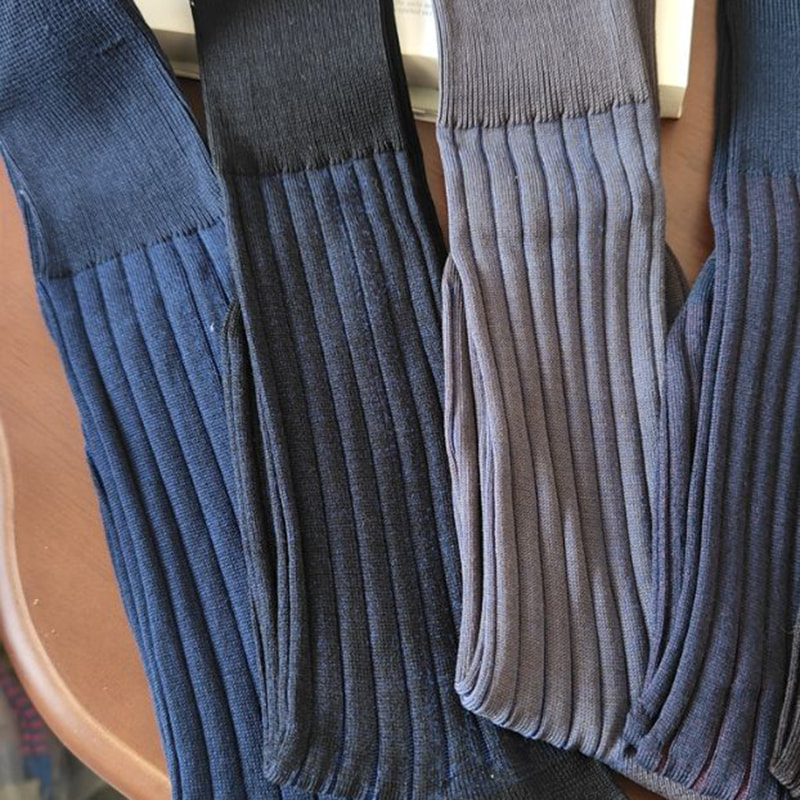
A sock that reaches the calf gives the gradient somewhere to travel. A longer style such as this one is designed for full length coverage over the ankle and lower calf:
Eight to twelve hours is the normal daily window for men's compression socks. That covers a work shift or a long flight but stops short of overnight, because ankles usually drain well enough when you are lying down. Take the socks off before bed unless a clinician has told you otherwise, and put your feet up for 20 minutes in the evening.
On travel days the timing rules tighten. Put the socks on before you leave the house, stand and walk every hour you are awake, and drink water rather than relying on salty airport food. Compression manages pooling, but it does not replace movement.
Wash the socks after every wear in lukewarm water, by hand or on a gentle cycle, and skip both the fabric softener and the dryer. Heat and softener break down the elastane that creates the gradient, so the same habits that extend the life of everyday socks apply here, and a two-pair rotation will outlast a single pair by a wide margin. These care and maintenance habits for men's socks are a good baseline for any sock you plan to wear daily.
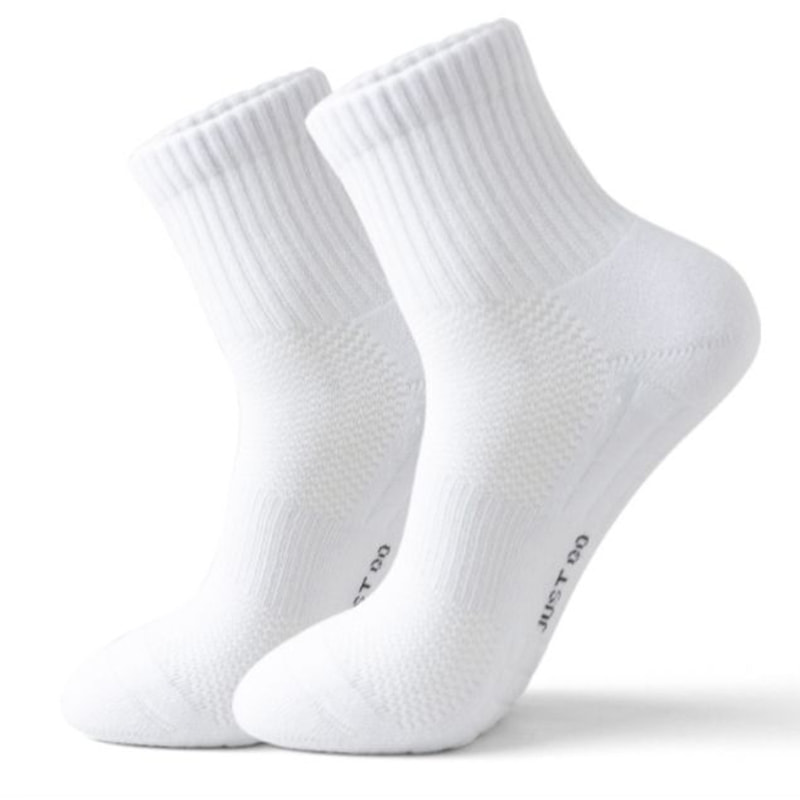
For training days, a sock with a cushioned footbed under a graduated upper is usually more comfortable than a thin medical stocking, especially in shoes that run warm. A towel-bottom sport style like this one handles the sweat and the impact:
Compression is not supposed to feel like nothing. A firm hug around the ankle and a light squeeze at the calf for the first hour is normal, and it usually settles once you start moving. What is not normal is numbness, a burning sensation, or a band that leaves a deep groove which takes more than 30 minutes to fade.
first week of wear, in cm 27.526.525.5Day 1Day 2Day 3Day 4Day 5Day 6Day 7Evening measurement, taken at about 7:00 PM
The line follows evening ankle circumference over the first seven days of consistent morning wear, starting at 27.2 cm and ending near 26.0 cm. The change is not dramatic on any single day, which is exactly why some men quit in the first 48 hours. Most of the drop happens between day one and day four, and the curve flattens after that. That shape is normal, because compression does not remove fluid permanently, it keeps the daily build-up smaller. A flat line in week two still means the sock is doing its job, especially if afternoon tightness and discomfort have eased. If the line climbs instead, check for folds in the fabric, a sock that has lost its stretch, or a medical cause that belongs with a clinician.
Comparing Sock Styles for Swollen Ankles
Three options come up again and again in this conversation, and they are not interchangeable. The chart below scores each one from 1 to 5 on the five things men mention most often, which are pressure control, calf coverage, all day comfort, ease of putting on, and breathability.
The radar chart scores three options against five things men usually care about when their ankles swell. Ankle-length short socks score well on breathability and are easy to put on, but they offer almost no calf coverage and weak pressure control above the ankle. A calf-length compression sock balances the five points, with solid pressure control, decent coverage, and moderate breathability for daily wear. A knee-high medical stocking controls pressure and covers the calf best, but it is the hardest to put on and the warmest in summer. The trade-off is worth naming clearly, because the more of the leg the sock covers, the more control you get and the more effort the sock asks of you each morning. For most working men with mild to moderate swelling, the middle option is the one that actually gets worn every day, and a sock in the drawer beats a stronger sock in the package.
Warning Signs That Mean Stop and Call a Clinician
Swelling in one leg only, especially with pain, warmth, or redness.
Sudden swelling together with chest pain or shortness of breath.
Toes that turn white or blue, or tingling that does not ease within 15 minutes of removing the sock.
Broken skin, blisters, or a rash under the sock.
Swelling that gets worse after several days of correct wear.
Compression socks manage a symptom, not a cause. Heart, kidney, liver, and vein conditions can all produce ankle swelling, and so can several common medications. If any of that applies to you, or if the swelling appears suddenly, get medical advice before you order a class of sock you may not need.
Good compression for swollen ankles comes down to three numbers and one habit. Measure the ankle and the calf in the morning, choose the class that matches your swelling rather than the strongest one on the shelf, and put the socks on before your feet touch the floor. Replace them every three to six months, or as soon as the top band stops snapping back, because relaxed fabric stops delivering the gradient the label promises.
Combinando elementi tradizionali cinesi con tendenze moderne e mettendo in mostra un forte stile cinese attraverso design unici, questo stile di design non solo soddisfa le esigenze personalizzate dei giovani oggi, ma aggiunge anche un fascino culturale unico all'usura quotidiana. La tecnologia di stampa 3D avanzata viene utilizzata per rendere i motivi e le trame sui calzini più tridimensionali e vividi. Questa tecnologia non solo migliora la precisione e la chiarezza dei modelli, ma rende anche i calzini più riconoscibili e alla moda. Come calzini a metà lunghezza, la loro lunghezza è moderata, il che può proteggere le caviglie dall'invasione fredda delle stagioni primaverili e autunnali e non sarà troppo calda e umida. Allo stesso tempo, i cambiamenti del tempo nelle stagioni primaverili e autunnali sono vari e questo calzino può adattarsi bene a questi cambiamenti, offrendo un'esperienza di usura comoda per i piedi. Stampato sui calzini i motivi sono ricchi e diversi, possono essere motivi tradizionali cinesi come montagne e acque, fiori e uccelli, draghi e fenice o motivi creativi che combinano elementi alla moda moderni.
American Tie Dye è un processo di tintura unico che utilizza specifiche tecniche di legame e tintura per creare un modello ricco e colorato e un effetto di gradiente di colore sui calzini, aumentando il senso della moda e la personalizzazione del prodotto, Progettato con una media lunghezza, è adatto per l'abbigliamento sportivo come il basket, fornendo avvolgimento sufficiente e protezione della caviglia da distorsioni e altre lesioni. Il fondo è progettato con un asciugamano spesso, che ha prestazioni che vagano per l'umidità e può assorbire rapidamente il sudore dai piedi, mantenendoli asciutti e comodi e riducendo lo scorrimento e l'attrito durante l'esercizio. Il corpo di calzino può avere un design in loop per aumentare lo spessore e il calore delle calze, migliorando al contempo il comfort e la morbidezza dell'uso. Realizzato in puro materiale di cotone, il cotone puro ha una buona traspirabilità e cordialità della pelle, riducendo l'odore del piede e la crescita batterica e mantenendo la salute dei piedi. Il prodotto può incorporare elementi di stile INS popolari, come la corrispondenza del colore e il design del motivo, per renderlo più in linea con le esigenze estetiche dei giovani consumatori.
Adottando una tecnologia di stampa 3D avanzata, i modelli presentano un forte senso di tridimensionalità e stratificazione, rendendo le calze più alla moda e uniche. I motivi sono luminosi e resistenti, non facili da sbiadire e mantengono l'aspetto delle calze come nuove per molto tempo. Ci sono ricche scelte di pattern, tra cui stili di strada europei e americani, elementi sportivi, arte dei graffiti, ecc., Per soddisfare le esigenze personalizzate dei diversi consumatori. Sono selezionati materiali di cotone di alta qualità, con un tocco morbido e un comfort per la pelle. Il materiale di cotone ha una buona traspirabilità, mantenendo i piedi asciutti, riducendo la crescita batterica, assorbendo e scaricando rapidamente l'umidità del piede, mantenendo i piedi asciutti e confortevoli, adatti per indossare nelle stagioni primaverili e estive. I calzini hanno una buona elasticità, possono adattarsi strettamente a diverse forme del piede e ridurre l'attrito e il disagio durante l'esercizio.
I calzini 3D, appartenenti alla categoria di calze corte, integrano stili tradizionali europei e americani con elementi di stampa. Attraverso la tecnologia di stampa 3D, sui calzini sono presentati motivi e design unici, rendendoli più alla moda e personalizzati. Lo stile tradizionale europeo e americano di solito enfatizza la libertà, l'individualità e l'espressione d'avanguardia, con colori vivaci, motivi unici e diversi motivi di stampa, che possono includere cartoni animati, anime, lettere, numeri, forme geometriche, ecc .
Utilizzando il materiale in cashmere di imitazione, questo materiale ha un tocco morbido come il cashmere e le prestazioni di isolamento. La fibra di cashmere di imitazione è delicata e può effettivamente bloccare l'aria, formando uno strato di isolamento che fornisce calore duraturo per i piedi. Lo strato interno è ispessito con cashmere per garantire che anche al freddo possa fornire un calore sufficiente ai piedi. Questo design non solo migliora l'effetto isolante, ma aumenta anche il comfort di indossare, Considerando che il terreno può essere scivoloso durante le stagioni autunnali e invernali, il prodotto presta particolare attenzione alle prestazioni anti-slittamento. Utilizzando speciali materiali anti-slip e tecniche di lavorazione, garantisce una maggiore stabilità e sicurezza durante la camminata. Il tessuto del prodotto è resistente all'usura e resistente, non facile da pillola o sbiadire e può mantenere un buon aspetto e prestazioni anche dopo indossare e lavaggio a lungo termine. È realizzato con materiali altamente elastici che possono adattarsi a diverse forme del piede e delle gambe senza alcuna tenuta o pieghe quando indossato.
L'uso di un design peluche e ispessito può isolare efficacemente l'aria fredda e fornire calore duraturo per i piedi. Lo strato di peluche addensato non solo aumenta il calore, ma migliora anche l'usura del comfort. La superficie dei calzini è realizzata in materiale ad anello spazzolato, che ha un buon calore e facilità per la pelle. Il ciclo spazzolato può bloccare più aria, formare uno strato di isolamento termico e ridurre la perdita di calore. Il design di lunghezza della tuba centrale è sia caldo che alla moda, copre l'area del vitello e prevenendo efficacemente l'invasione del vento freddo. Allo stesso tempo, è anche comodo abbinare con vari stili di scarpe autunnali e invernali, come stivali, scarpe sportive, ecc. Il prodotto ha anche la funzione di calzini da pavimento e calzini da asciugamano, adatti per indossare in ambienti domestici. Il materiale morbido e il tocco confortevole consentono a chi lo indossa di godere di calore e comfort a casa. Elaborazione speciale viene utilizzata per garantire che le calze non vengano facilmente versate i capelli durante l'usura e il lavaggio, riducendo gli inconvenienti e i problemi di pulizia causati dalla perdita di capelli.
Il prodotto utilizza principalmente materiale in pile di corallo, che è un tessuto morbido, caldo e adatto alla pelle che è molto adatto alla pelle delicata dei bambini. Inoltre, alcuni prodotti possono anche combinare materiali come il pile di agnello per migliorare ulteriormente l'effetto di calore. Il pile di corallo e il pile di agnello hanno entrambi buoni prestazioni di isolamento, che possono effettivamente bloccare la temperatura e fornire calda cura per i piedi dei bambini, specialmente adatti per indossare in inverno freddo. Il prodotto incorpora schemi di cartoni animati ricchi, come motivi a tema natalizio, motivi animali, ecc. Questi motivi non sono solo carini e interessanti, ma stimolano anche l'immaginazione e l'interesse dei bambini.
I calzini sono realizzati principalmente in materiali in pile di corallo o di pile di agnello, entrambi con prestazioni di isolamento e sono morbide e adatte alla pelle, offrendo ai bambini un'esperienza di usura calda e confortevole. Alcuni prodotti possono utilizzare materiali miscelati, come la fibra di poliestere (poliestere), per aumentare la durata e la traspirabilità dei calzini. I calzini sono stampati con vari motivi di cartoni animati, come elementi di Natale (come fiocchi di neve, Babbo Natale, renne, ecc.), Modelli di animali (come orsi, conigli, ecc.), Aumentando il divertimento e la carineria delle calze, adatte all'estetica dei bambini. Il design del tubo medio può proteggere meglio le caviglie e i polpacci dei bambini ed evitare di raffreddare e le calze a pavimento sono adatte anche per i bambini da indossare quando giocano sul pavimento a causa del loro materiale morbido e non slip.
I calzini adesivi ad ago grossolano in pile di corallo adottano un design anti-slip adesivo nella parte inferiore o parti chiave delle calze, che possono aumentare l'attrito tra i calzini e il terreno o la suola, impedire scivolare durante la camminata o il movimento e sono particolarmente adatti per indossare su superfici lisce come case e pavimenti. Il pile di corallo ha fibre lunghe e spesse strati d'aria, che hanno un buon isolamento e prestazioni di calore, adatte per indossare in stagioni fredde e possono effettivamente impedire che i piedi si raffreessero. Il pile di corallo ha una consistenza morbida e delicata e un tocco confortevole e può adattarsi alla pelle, avvolgere i piedi, alleviare la fatica e offrire un'esperienza di usura calda e confortevole. Il pile di corallo ha una buona traspirabilità e un assorbimento di umidità, che può assorbire l'umidità in eccesso dai piedi e dissiparlo attraverso i pori per mantenere i piedi asciutti. Anche i calzini in pile di corallo hanno alcune proprietà. La funzione antibatterica e deodorante, aiuta a ridurre la crescita batterica e mantenendo puliti i piedi.
L'adozione di uno speciale design anti-slip, come un fondo anti-slittamento adesivo, aumenta l'attrito con il terreno, impedendo effettivamente i bambini di scivolare su trampolini, vetrini e altre attrezzature. Il design alto può avvolgere meglio le caviglie dei bambini, fornire ulteriore supporto e protezione, ridurre il rischio di distorsioni e utilizzare tessuti di alta qualità con buona traspirabilità e assorbimento di umidità per mantenere i piedi asciutti e comodi, evitando pieghezzazioni causate dall'usura a lungo termine. Il tessuto appositamente trattato ha un'elevata resistenza all'usura e può resistere ad attrito frequente e trazione durante le attività dei bambini.
Le calze da yoga per adulti di solito usano trame o materiali speciali, come particelle anti-slip a forma di punto sul fondo, che impediscono effettivamente il praticante di scivolare durante i movimenti e proteggere la loro sicurezza. Le particelle anti-slip possono essere incorporate nel tappetino yoga per fornire una certa resistenza e impedire al piede di spostarsi sotto la pressione di peso, I calzini da yoga sono spesso realizzati in materiali assorbenti e asciugati, come il cotone morbido, la fibra di bambù, ecc., Che possono assorbire rapidamente il sudore dai piedi, mantenerli asciutti e avere un buon assorbimento di umidità e prestazioni che vagano il sudore, aiutando a ridurre il disagio causato dai piedi umidi e migliorare l'esperienza di esercizio.
Viene utilizzato il materiale del pile di corallo di alta qualità, che ha buone prestazioni di isolamento e può effettivamente impedire che i piedi si raffreddi. Il design ispessito migliora ulteriormente l'effetto isolante delle calze, anche nelle fredde stagioni autunnali e invernali, fornendo abbastanza calore per i tuoi piedi. Il materiale del pile di corallo è morbido e delicato, confortevole al tatto e non causerà irritazione alla pelle. Non si sentirà a disagio se indossato per molto tempo. Ha una buona elasticità e può adattarsi a diversi tipi di piede, rendendolo più comodo e comodo da indossare. Il materiale del pile di corallo di solito ha una buona resistenza all'usura e non è facile da pillola o deformarsi, quindi questo calzino è relativamente resistente.